
Draft for review. Not an offer.
Fusion copies the Sun.
Its scarce ingredient is sorted from ordinary lithium. Ten stations. One number each.

01 / The mix
The world still runs on coal, oil and gas.
The world still runs on coal, oil and gas.
86% of its energy in 2025. Clean power is growing, but the grid also needs power that runs day and night. Nuclear does that today. Fusion is meant to do it next. Both depend on lithium sorted by isotope.
86%
Coal, oil and gas
5.2%
Nuclear
2.7%
Hydro
5.9%
Wind, solar, other renewables
Shares of supply, 2025. Energy Institute method for all energy. Ember for electricity.
The rate
The world used about 103 million barrels of oil a day in 2025. About 1,190 barrels every second. Since you opened this station:
0 barrels
calculated from the Energy Institute figure
The hole and the sea lane
28 February — Hormuz shut. Close to a fifth of the world's oil. Brent went through US$100. Diesel at the terminal gate went from 166 to 290 cents a litre in three weeks. Two in three workers stood down at one Western Australian gold miner that could not fill its tanks. Government went to level 2 of 4. A country the size of Australia, and one shut door decides whether its trucks run.
documented; the miner reference carries the ABC's correction that the mine kept operating
Data centres used about 415 TWh of electricity in 2024 and could use about 945 TWh by 2030, roughly what Japan uses today. IEA projection

02
Oil now. Nuclear today. Fusion next.
Oil now. Nuclear today. Fusion next.
Both the reactors we have and the fusion plants being designed depend on lithium sorted by isotope: lithium-7 for today's reactors, lithium-6 for fusion fuel.
Oil, now
86% of all energy
Nuclear, today
About 5% of all energy, and 9% of electricity
Fusion, next
None. No plant is on a grid.
Who holds it today: Oil. documented, except the death rates, which are modelled.
03
The principle, not the fuel.
Fusion copies the Sun's principle, not its fuel.
Deuterium is hydrogen with one extra neutron. Tritium has two. Both behave chemically like ordinary hydrogen. Only tritium is radioactive, and tritium has to be made from lithium-6.
Deuterium and tritium
17.6 MeV. A helium nucleus and a 14.1 MeV neutron. Every fusion plant now being designed starts here.
The pair · established physics
So “as the Sun does” is right, and “the same fuel as the Sun” would not be.

04
Make the fuel.
One fusion makes a spare neutron. Lithium-6 turns it into the next tritium.
A plant cannot buy its tritium. The commercial stock is about 25 kilograms, and it decays. The plant breeds its own in a blanket of lithium. Lithium-6 splits into helium and tritium and releases a further 4.8 MeV. Lithium-7 mostly lets the neutron pass.
0
neutrons fired
0
tritium atoms made
—
hit rate
Simplified on purpose. Real blankets add multipliers. Most designs want roughly 30% to 90% lithium-6. Established physics, simplified.
Deuterium plus lithium-6 gives 22.4 MeV per lithium-6 atom across the two steps. One kilogram of pure lithium-6, fully used, is about 359 terajoules of heat — about 100 gigawatt-hours of heat, the heat of roughly 58,700 barrels of oil. A plant would turn about a fifth of that heat into electricity. No fusion plant operates yet. Lithium-7 is not a fuel.
calculated from established reaction energies and the US EIA heat content of a barrel
05
Steam. Then a turbine.
Electricity is still made with steam and a turbine. What changes is the heat.
Deuterium from seawater. Lithium-6 sorted from ordinary lithium — the step the filing addresses. Plasma, a lithium blanket, molten salt, then steam, a turbine and a generator. Filed, not measured, for our step. The back end is a hundred years old.
Deuterium from seawater. Lithium-6 sorted from ordinary lithium. That sorting step is the filing. Filed, not measured.
The US Department of Energy screened 394 retired-coal sites in 2022 and found most of them suitable for advanced reactors, because the grid connection, switchyard and buildings already exist. TerraPower is building at a coal plant in Wyoming. The UK's prototype fusion plant is planned at West Burton, a retired coal station. Australia's coal fleet retires on the same sort of connections. documented; the fusion date is a government plan
400 MW
of electricity, before the plant's own magnets and heating. The published studies often assume about 20%.
calculated
Data centres want power that never stops, on a small site, with no fuel deliveries. By mid-2026 the largest buyers had signed for fission and, in one case, for a first fusion plant in the early 2030s. Of those, salt-cooled units need lithium-7. A fusion plant breeds from lithium-6. Pressurised-water restarts use lithium-7 by the kilogram. Boiling-water units use none. documented; contract terms mostly undisclosed

06
A drum against a tanker.
One drum of lithium-6 against a supertanker of oil.
A very large crude carrier carries about two million barrels. Thirty-four kilograms of lithium-6, bred into tritium and fused with deuterium, holds the heat of one such cargo. The plant that would do it does not yet exist.
1,994,678
barrels of oil for the same heat
1.0
two-million-barrel tankers
73.9 L
the lithium-6 metal occupies
It ships as dry salt in sealed drums, not as a tanker. Lithium enriched above natural abundance in lithium-6 is a controlled good. Each export needs a permit naming the buyer and the end use. Neither isotope is radioactive. Nothing fissile is in the drum.
calculated by heat content. Paperwork: Australian Defence and Strategic Goods List.
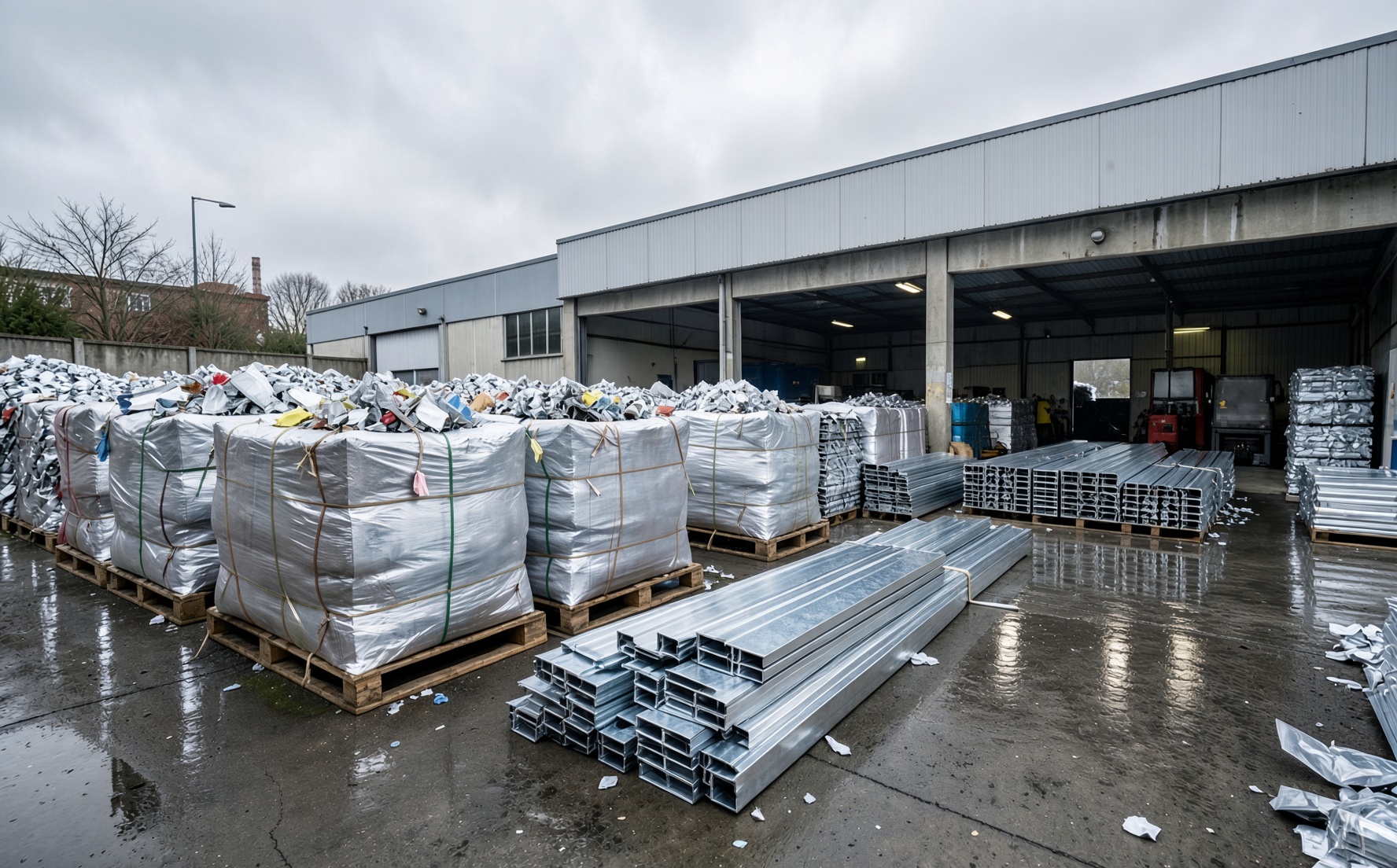
Natural lithium is 7.5% lithium-6. Fusion blankets in the studies sit between 30% and 90%. Reactor salt wants 99.99% lithium-7, which is the other end of the same cascade. About 4% of the lithium taken in leaves as the enriched product. The rest goes back to batteries, which do not care which isotope they get.
The same heat, as things you can picture
A grain of rice of lithium-6, turned into electricity at 30%, runs an Australian home for about a month. A sugar cube, about two years. One kilogram, Sydney for about nine hours. One drum, 34 kilograms, one oil supertanker, or Sydney for about two weeks. One tonne, about twenty-nine supertankers, or Sydney for about a year. The plant does not exist. The arithmetic is the point.
calculated; 30% conversion assumed. Check city figures against AEMO before quoting.

07
Ordinary. And scarce.
The raw materials are ordinary. The sorting is scarce.
Deuterium is in every litre of seawater, about 30 grams in a cubic metre, and separating it is a solved process. About 290,000 tonnes of lithium were mined in 2025. Australia's 92,000 tonnes were the largest share. Natural lithium is 7.5% lithium-6.
52 t
lithium-6 for the first fill
693 t
ordinary lithium to sort, at least
224 kg
lithium-6 burned each year after that
That first fill is about under a day of 2025 mine output, and real plants need more feed because no process strips every lithium-6 atom. Abundance is not the constraint. Almost nobody outside Russia and China sorts lithium at scale. calculated from published design studies

08
Same chemistry. Different weight.
They differ only in weight, so sorting takes many steps.
A lithium-7 atom is about one-sixth heavier. That is the only handle. Each pass shifts the mix a little. The size of that shift is the separation factor.
31
stages in an ideal cascade, from 7.5% lithium-6. Real plants need more stages and recycle streams. Treat the count as a comparison, not a design.
calculated. Factors are as their authors reported them.
One sort, two products. Lithium-6 leaves one end for fusion blankets. Lithium-7 leaves the other for salt-reactor coolant. The share neither product needs goes back to battery makers. A better sorting step is worth more than a bigger plant. The engineered boundary in AU 2026908009 has not been measured.

09
Two isotopes. One sort.
Lithium-7 runs today's reactors. Lithium-6 makes tomorrow's fuel.
Lithium-7 is not a fuel. It keeps today's pressurised-water reactors from turning acidic, and it is the salt in molten-salt reactors now under construction, because it carries heat without swallowing the neutrons. Lithium-6 does the opposite: it absorbs neutrons and becomes tritium. Tag each card.
Google has agreed to buy up to 500 MW from Kairos Power’s salt-cooled reactors.
Google and Kairos Power, 14 October 2024
Demand for lithium-7 could rise from about 1 tonne a year to about 250 tonnes.
World Nuclear Association scenario, via Energy Policy 216 (2026)
Fusing deuterium and tritium releases 17.6 MeV.
World Nuclear Association; standard nuclear data
One kilogram of lithium-6, used fully with deuterium, releases the heat of about 9 million litres of oil.
Our calculation from 22.4 MeV per atom
Our engineered boundary sorts the isotopes better than a bare electrode.
AU 2026908009, filed 21 September 2026
ASP Isotopes expects its first lithium-6 plant to be running in 2026.
ASP Isotopes, SEC filing, 24 March 2026
Australia mined about 92,000 tonnes of lithium in 2025.
USGS Mineral Commodity Summaries 2026
Air pollution from fossil fuels causes about 5.1 million early deaths a year.
Lelieveld et al., BMJ, 2023
Data centres could use about 945 TWh of electricity in 2030.
IEA, Energy and AI, 2025
The United States stopped mercury-based lithium enrichment in 1963.
Historical record; Energy Policy 216 (2026)
A vanadium-oxide electrode enriches lithium-6 by about 5.7% per cycle.
Chem 11(8), 2025, Texas A&M and ETH Zürich
Tagged 0 of 11. Matching tags: 0.
10
The diligence check.
Nine questions a careful reader asks.
1. What do fusion power plants burn?
2. Where does a fusion plant get its tritium?
3. What is lithium-7 used for?
4. Which of these is radioactive?
5. What does “filed” mean for AU 2026908009?
6. How much lithium-6 does one published 2-gigawatt blanket design call for?
7. What limits enriched lithium today?
8. How does the engineered boundary compare with published separation factors?
9. Is ordinary hydrogen from water, or from metal and water, a fusion fuel?
Answered 0 of 9. Matching answers: 0.
Start over at station 1Sources include the Energy Institute Statistical Review 2026, Ember, the IEA, the World Nuclear Association, ITER, USGS, Giegerich 2019, Ward et al. in Joule 2025, and Kairos Power’s own statements. Company statements are those companies’ own. Benefits may surface. None are assured. Prepared as a draft for review.